
Setting the Anchor on Animal Ethics at Big Major Cay
I have dropped anchor off Big Major Cay more times than I can count on my weathered fingers, watching the morning mist rise off the turquoise shallows while my parrot, Sloop, preens his feathers on the wheelhouse roof. The Exumas have a quiet beat to them, a steady cadence set by the tides and the wind. Out here, human schedules mean little when measured against the sea. People travel thousands of miles to witness our swimming swine, but few stop to consider that this small cay is a living ecosystem home to twenty or twenty-five feral hogs relying entirely on human stewardship for their survival.
Running a boat through these waters teaches a captain that privilege demands responsibility. When day-trippers arrive on speedboats from Nassau or private charters out of Staniel Cay, their first impulse is to rush the waterline with cameras flashing. A proper visit requires patience and a deep respect for animal welfare. Understanding official Bahamas Ministry of Tourism guidance keeps both you and the herd safe from harm. Before you step off the gunwale into the shallow water, you need to read the shore the same way a captain reads a changing tide, with keen eyes and a calm disposition.
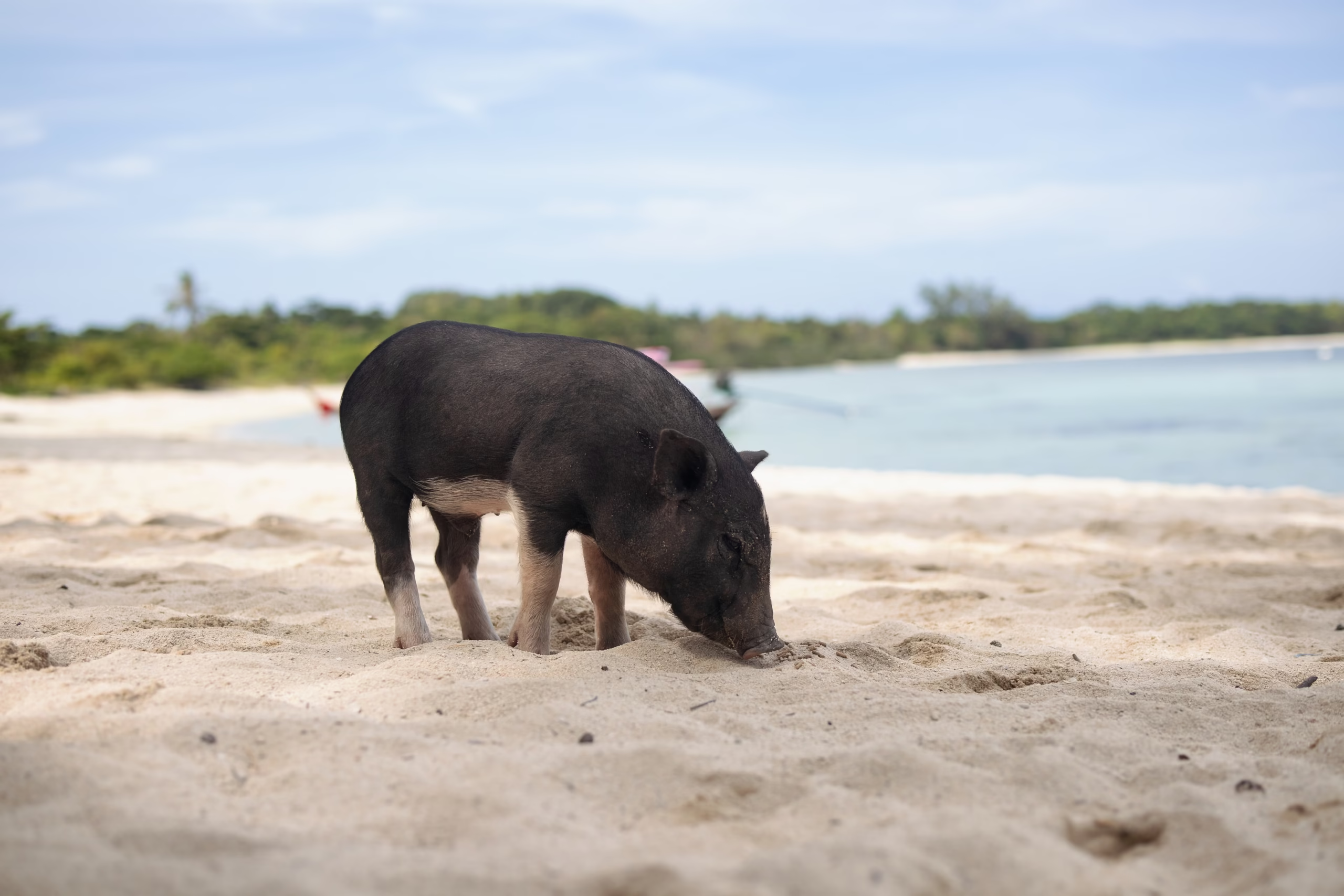
Understanding the Feral Colony: Who the Swimming Pigs Are and Why They Need Protection
The colony on Big Major Cay consists of roughly twenty-four feral pigs, ranging from heavy breeding sows and boars down to timid piglets. These animals are not wild swine, nor are they domesticated pets in a farmyard. They exist in a unique, vulnerable space where human interaction feeds them, yet their natural instincts still govern their reactions. You can learn more about how they got here on our history and origins guide, but today their survival depends on how carefully we treat their daily routines.
Many first-time travelers ask if are the pigs at pig beach friendly. They are accustomed to people and will readily paddle out to skiffs in search of a hand-out, but they remain large, heavy animals driven by food motivation. A mature sow weighs upwards of three hundred pounds. If she feels cornered, startled, or frustrated by visible food that is withheld, her behavior can shift instantly. Respecting their physical space and understanding their wild temperament prevents unexpected nips and ensures the colony stays healthy for generations that follow.
The Golden Rule of Nutrition: Approved Foods vs. Prohibited Snacks
Feeding these animals is the primary attraction, yet improper diet represents the greatest single threat to their lives. A lot of folks arrive wondering what do the pigs eat on pig beach during a typical day. Local caretakers from Staniel Cay and responsible captains strictly enforce an approved list of foods. Fresh water is their greatest necessity, followed by raw fruits and crisp vegetables. Apples, sliced watermelons, pitted oranges, carrots, and celery supply vital moisture and vitamins without disrupting their digestive tracts. Specialized pig pellets distributed by authorized guides also deliver balanced nutrition.
Prohibited items are strictly forbidden by marine wardens and local regulations. Processed chips, sugary candies, salty snacks, spicy leftovers, and massive quantities of white bread wreck their stomachs and cause severe dehydration. Alcohol is an absolute violation of local laws. Feeding them junk food causes chronic liver issues, aggressive food hoarding, and painful bloating. Sloop usually squawks whenever he spots someone unbagging salty snacks on deck, and I make sure those bags stay firmly inside the cabin where they belong.
“Treating an island pig like a trash can for human junk food is a sure way to kill the very magic you came to see. Give them sweet apples, fresh carrots, and gallon upon gallon of cool water.”
— Captain Elias Thorne
Managing the Sand Factor: Why Troughs and Shoreline Feeding Matter
Several years ago, the colony suffered a devastating loss when multiple pigs died suddenly after severe weather events and improper feeding practices. Post-mortem examinations by veterinarians from the Humane Society revealed that sand accumulation inside their stomachs created fatal intestinal blockages. When visitors drop food directly onto dry beach sand, hungry pigs vacuum up gritty silica alongside their meal. Over time, that sand settles like concrete in their guts.
To eliminate this hazard, local volunteers installed wooden feeding troughs along the treeline on Big Major Cay. When you offer food on the dry beach, you must place it directly inside these designated troughs. Alternatively, you can feed the pigs while wading in waist-deep ocean water, tossing small pieces of fruit into the clear sea so they scoop it off the water surface without touching bottom sediment. Never offer food directly from your bare fingers on land, as a pig cannot easily distinguish between a slice of apple and your thumb when snatching a bite off dry sand.
Personal Space and Respect: Zero Tolerance for Harassment
Knowing what should visitors avoid doing at pig beach saves you from an embarrassing injury or a heavy fine from local authorities. The Bahamas Ministry of Tourism collaborates with marine patrol units to enforce strict rules against animal abuse. Riding pigs, sitting on their backs, picking up young piglets, or pinning animals down for social media photographs is strictly illegal. Feral sows are fiercely protective of their litters, and grabbing a piglet will trigger an immediate, aggressive response from every adult hog within earshot.
- No Chasing or Cornering: Allow the pigs to approach you on their own terms; never pursue an animal heading toward the scrub brush.
- No Teasing with Food: Holding fruit out of reach to force a pig to stand on its hind legs causes joint strain and provokes defensive snapping.
- Protect the Piglets: Young piglets have fragile bones and sensitive skin; admire them from a distance without attempting to lift them up.
- Secure Personal Belongings: Pigs have an acute sense of smell and will chew through beach bags, backpacks, and camera cases searching for hidden food.
In-Water Etiquette: Keeping Calm When the Hogs Paddle Out
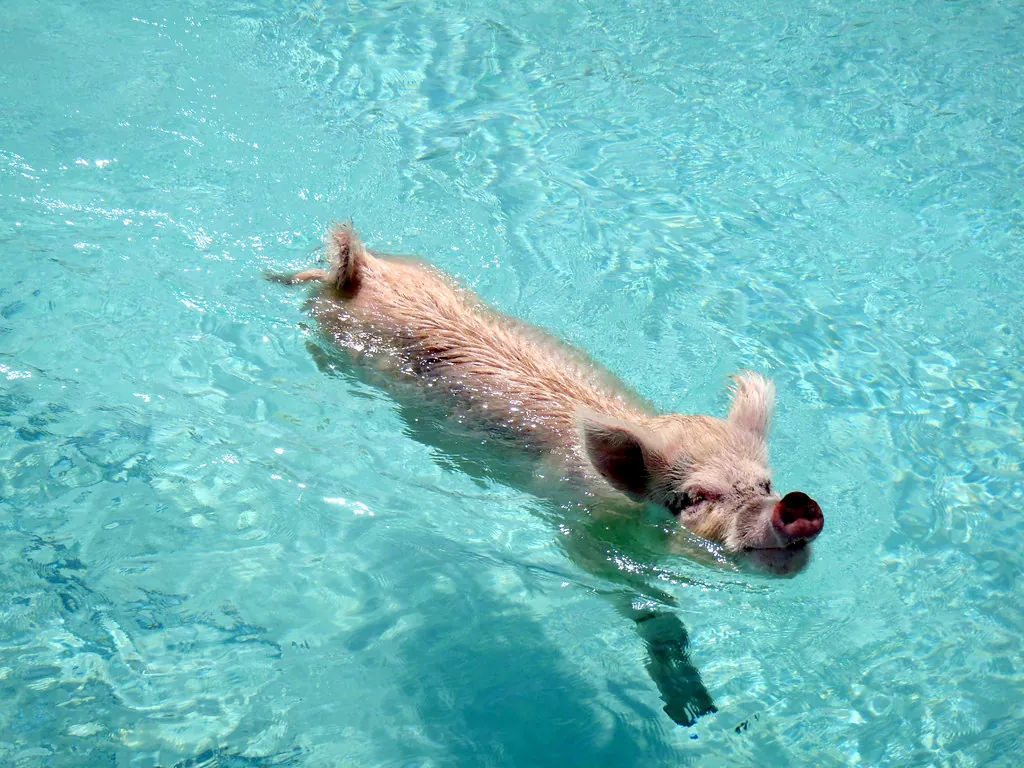
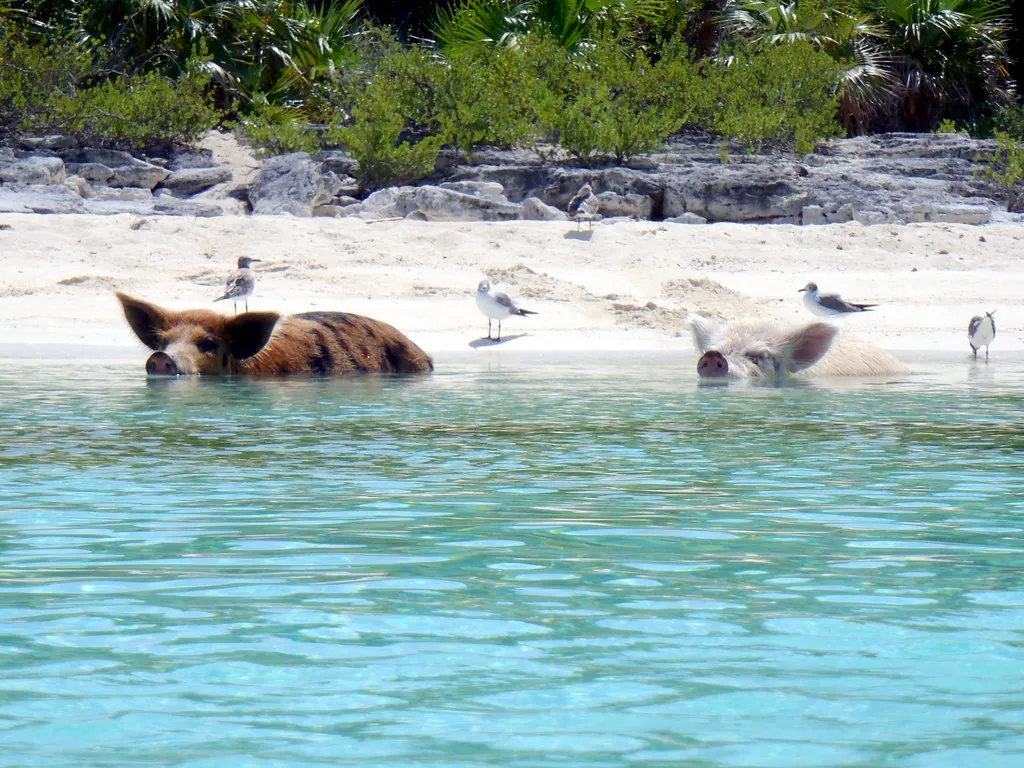
Watching a three-hundred-pound hog swim through crystal-clear water directly toward your tender is an unforgettable sight. As they move through the sea, their hooves churn the surface, and they focus entirely on finding edible rewards. When you are swimming beside them, stay calm and keep your arms relaxed. Splashing frantically or screaming makes the pigs nervous, which can cause them to climb onto swimmers to keep their heads elevated.
Show open, empty palms if you do not have food in your hands. Pigs recognize this hand gesture quickly; once they see you have nothing to offer, they simply turn around and paddle out toward the next boat. If a swimming pig swims straight toward you while you are holding fruit, raise your hands high and drop the treat into the water a few feet away from your body. This directs the hog toward the food rather than toward your torso, keeping the encounter gentle and controlled.
Protecting the Fragile Cay: Environmental Stewardship
Big Major Cay is an uninhabited limestone island without municipal trash pickup, grid power, or commercial facilities. Every piece of plastic, water bottle, or wrappers left behind stays on that shore until a local boat captain picks it up. Plastics washed into the bushes pose a lethal risk to the pigs and native iguanas that ingest marine litter by mistake. Leave No Trace principles must guide every single visitor who steps onto the sand.
Pack out every scrap of waste you bring ashore, including fruit peels and cores that take months to decompose in dry tropical environments. Use non-nano zinc sunscreen that will not harm the surrounding coral reefs or irritate the sensitive skin of swimming pigs. Fresh water is liquid gold on an uninhabited cay; if you see the caretakers’ rain catchments, never contaminate those storage tanks or use drinking water for washing gear.
Is Pig Beach Ethical? Separating Stunts from Reality
Ethical travel questions often arise among travelers asking is the pig beach in the bahamas ethical before booking an excursion. The answer depends heavily on the operators you choose and how visitors behave on the island. The colony on Big Major Cay now benefits from routine medical checkups by visiting veterinarians, structured shade structures, and reliable freshwater catchments funded by local conservation efforts and responsible operators.
Problems arise when unvetted tour companies organize overcrowded, chaotic runs that treat the animals as mere photo props. Ethical operations prioritize animal rest during the heat of midday, enforce strict food limits, and restrict human volume when the herd shows signs of fatigue. Supporting local captains who respect animal welfare ensures that tourism directly funds the health and habitat maintenance of these famous animals.
“The sea rewards those who show patience and respect. When you visit Big Major Cay, you are a guest in their wild sanctuary home.”
Choosing Ethical Operators: How to Spot Responsible Boat Tours
Selecting the right charter makes all the difference between a chaotic day trip and an enriching marine adventure. Responsible captains operate small to medium vessels, brief their passengers on safety rules before dropping anchor, and carry fresh water specifically for the animals. They coordinate with local caretakers and adjust their arrival times to prevent massive boat congestion along the narrow beaching zone.
When booking your trip through our tickets and tour guide portal, choose operators that include educational briefings, enforce quiet zones near the piglets’ nursery area, and actively participate in beach cleanup initiatives across the Exuma Cays. If you are traveling from afar, check our transportation logistics page to understand transit times from Nassau or Great Exuma so you arrive well rested and prepared for a seamless day on the water.
Sloop’s Deckside Advice: Reading Animal Body Language
Over the decades, my parrot Sloop has squawked from the bow while watching thousands of human-swine interactions. Animals speak loudly through their body language long before they make a sound. Learning to read those subtle signs keeps your trip smooth and free of unwanted surprises, that is what we local captains always look out for.
| Behavior / Stance | What the Pig is Feeling | Recommended Visitor Action |
|---|---|---|
| Ears forward, relaxed trot toward water | Curious, hungry, friendly approach | Offer approved food in water with open palms. |
| High-pitched grunt, rapid head tossing | Impatient, demanding, food-frustrated | Show empty palms, step back slowly into sea. |
| Resting under palm shade, eyes half-closed | Overheated, resting, digestively full | Do not disturb; admire quietly from distance. |
| Laying beside suckling piglets in scrub | Protective mothering instinct | Keep clear distance; do not approach or photograph up close. |
Essential Visitor Guidelines Checklist
- Feed Only in Water or Troughs: Protect the animals from ingesting fatal sand by avoiding dry beach feeding.
- Provide Fresh Water First: Pigs appreciate clean freshwater poured into drinking containers far more than food snacks.
- Use Approved Snacks Only: Offer raw apples, carrots, watermelons, and specialized pellets; banish junk food completely.
- Maintain Personal Space: Never corner, ride, pick up, or physically restrain any pig or piglet on the cay.
- Practice Leave No Trace: Pack out all trash, use reef-safe sunscreen, and protect the fragile ecosystem.
- Support Ethical Charters: Book with licensed local guides who prioritize animal welfare over social media photo ops.
Navigating the waters around Big Major Cay requires the same mindfulness as navigating any tricky tidal passage. Treat the island with care, respect the herd’s boundaries, and you will sail home with memories that last a lifetime. Check out our comprehensive Pig Beach master hub guide for total coverage on planning your complete Exuma island-hopping itinerary.