Ethical Tourism: How to Interact Safely with the Swimming Pigs
My parrot Sloop gives a sharp squawk every time a fast boat roars past our dock, and to tell you the truth, I feel the exact same way. Out here in the Exumas, we watch the water like folks in the city watch traffic lights. You learn pretty quick that the sea dictates the pace of everything, including how we treat the creatures sharing these sandbars with us. Big Major Cay looks like a painting from any angle, but beneath the postcard view lies a fragile home. When travelers show up demanding a show without learning the rules first, the pigs pay the price. Ethical travel around these islands is not about ticking a box on a screen. It is about understanding that we are guests in their backyard, reading the tides of human impact before dropping anchor.
The Realities of Animal Welfare Behind the Feed
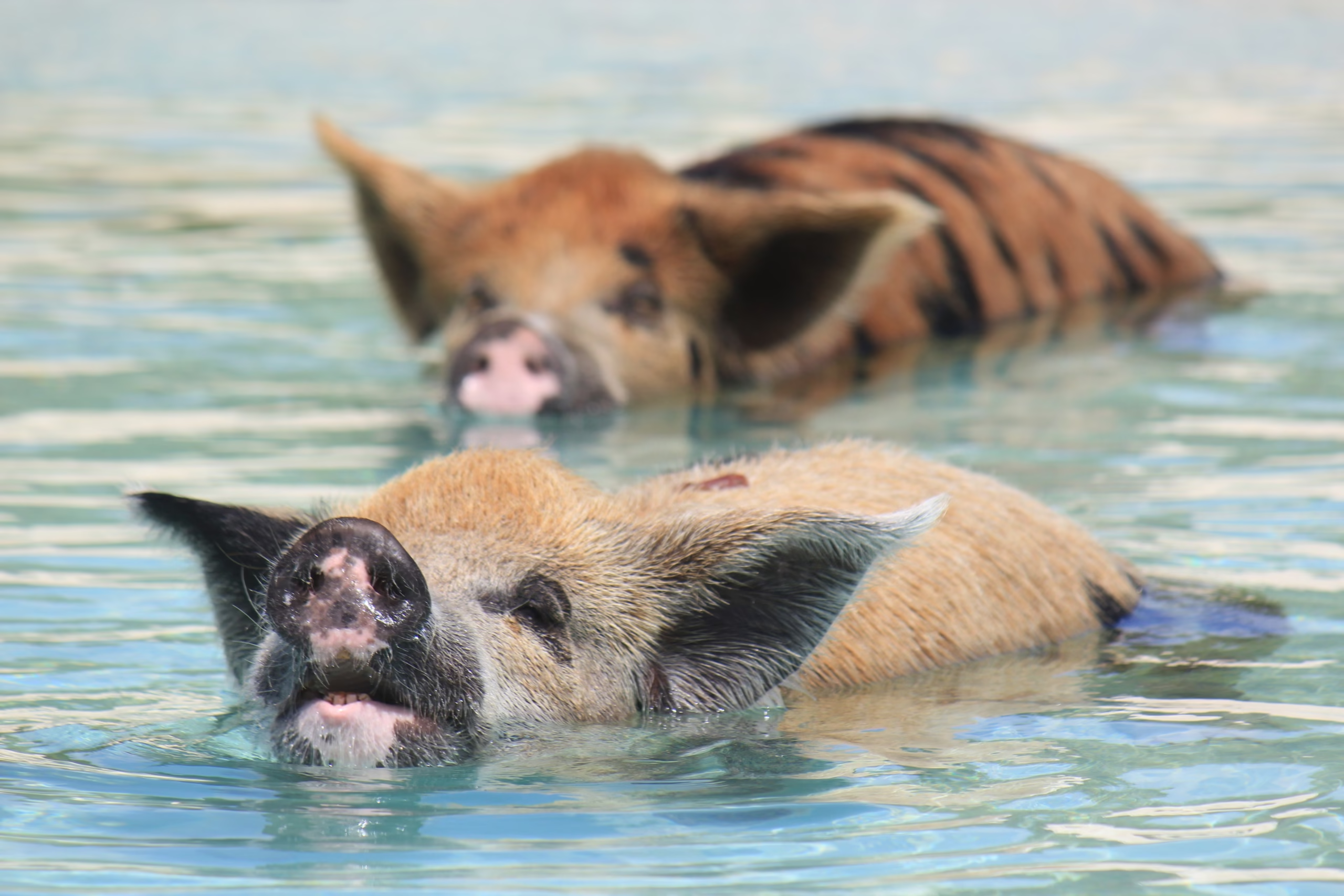
People see pictures online of a happy sow paddling out to meet a catamaran, and they assume it is all easy living for the herd. Reality on the beach is heavier than that. These are feral pigs, descendants of livestock left behind generations ago, and they rely on our good sense to keep them healthy. The population hovers around twenty to twenty-five pigs and piglets, led by the hefty matriarch we call Big Momma. People often ask me on the dock, is pig beach in the bahamas ethical? The answer depends entirely on the humans pulling up to the shore. When hundreds of visitors crowd the shallow water waving bags of processed snacks, the animals lose their natural foraging instincts. Stress levels spike when boats engine-rev too close, and competition for handouts leads to aggressive biting within the sounder. Taking care of them means giving them space and knowing when to back off.
If you treat the island like a theme park, you leave a mark the sea cannot wash off.
Captain Elias Thorne
Lessons from the 2017 Crisis
In February 2017, seven pigs tragically died in a single week, and it broke the heart of every true mariner in the cays. The tragedy forced local boaters and authorities to look hard at what was happening on the sand. Autopsies revealed stomachs filled with sand and raw salt water swallowed during frantic feeding frenzies in the waves. The Bahamas Ministry of Tourism and local conservation organizers had to intervene with emergency guidelines. Unregulated crowds tossing food directly into the surf meant pigs were gulping down massive amounts of wet sand alongside tossed junk food. That disaster proved that love without discipline is dangerous on an uninhabited cay. Today, non-profits, local residents, and the Bahamas National Trust coordinate regular freshwater deliveries and medical checkups to keep the remaining sounder stable.
The Golden Rules of Feeding and Interaction
Protecting these animals comes down to simple nautical discipline. Rule number one is that food stays on dry sand. Never feed a pig while it is swimming or standing in the surf. When food hits the water, the pig opens its mouth and swallows heavy seawater and sand, leading to fatal intestinal blockages and colic. Rule number two governs what goes into their mouths. Fresh carrots, apples, and watermelon chunks are approved treats. Bread, chips, processed meats, alcohol, and citrus fruits cause severe harm to their digestive tracts. If you want to know what should visitors avoid doing at pig beach, start by leaving the galley leftovers in your boat bag. Our detailed visitor rules and guidelines cover the complete breakdown of safety protocols, while our transportation guide helps you arrive with responsible boat captains.
| Allowed Diet | Prohibited Items | Feeding Location |
|---|---|---|
| Fresh Carrots | Bread, Pastries, and Chips | Dry Sand Only (Above High Tide) |
| Sliced Apples | Processed Meats and Citrus | Never in the Water or Surf |
| Watermelon Chunks | Alcohol and Soft Drinks | Away from Crowded Boat Drafts |
Reading Animal Psychology and Keeping Personal Space
Folks always want to know, are the pigs at pig beach friendly? They are wild animals conditioned to food, not pets looking for a cuddle on the sofa. Most of the time they are calm, but their mood shifts fast if they feel cornered or tricked. Ears pinned flat against the head, champing jaws, or a sharp grunt mean you are standing too close and need to take three steps back. Never chase them down the beach for a selfie, and never attempt to ride or lift the young piglets. A squealing piglet brings the mother hog charging across the sand at high speed, and a full-grown sow weighs hundreds of pounds. Long carrots allow you to offer treats while keeping your hands clear of their strong jaws.
Choosing Ethical Operators
Me and Sloop have watched dozens of fast skiffs drop anchor over the years, and you can spot a good captain right away. Ethical operators limit passenger counts, kill their engines early, and brief everyone before dropping the ladder. Selecting a tour that respects animal welfare is a standard every responsible captain ought to live by.
Preserving the Habitat
Big Major Cay has no formal trash collection service or park rangers stationed on the beach. Every piece of plastic, food wrapper, or water cap brought onto the island must leave in your trash bag. Leaving trash on the sand ruins teh island shoreline and endangers local seabirds.
Hygiene, Water Safety, and the Broader Ecosystem
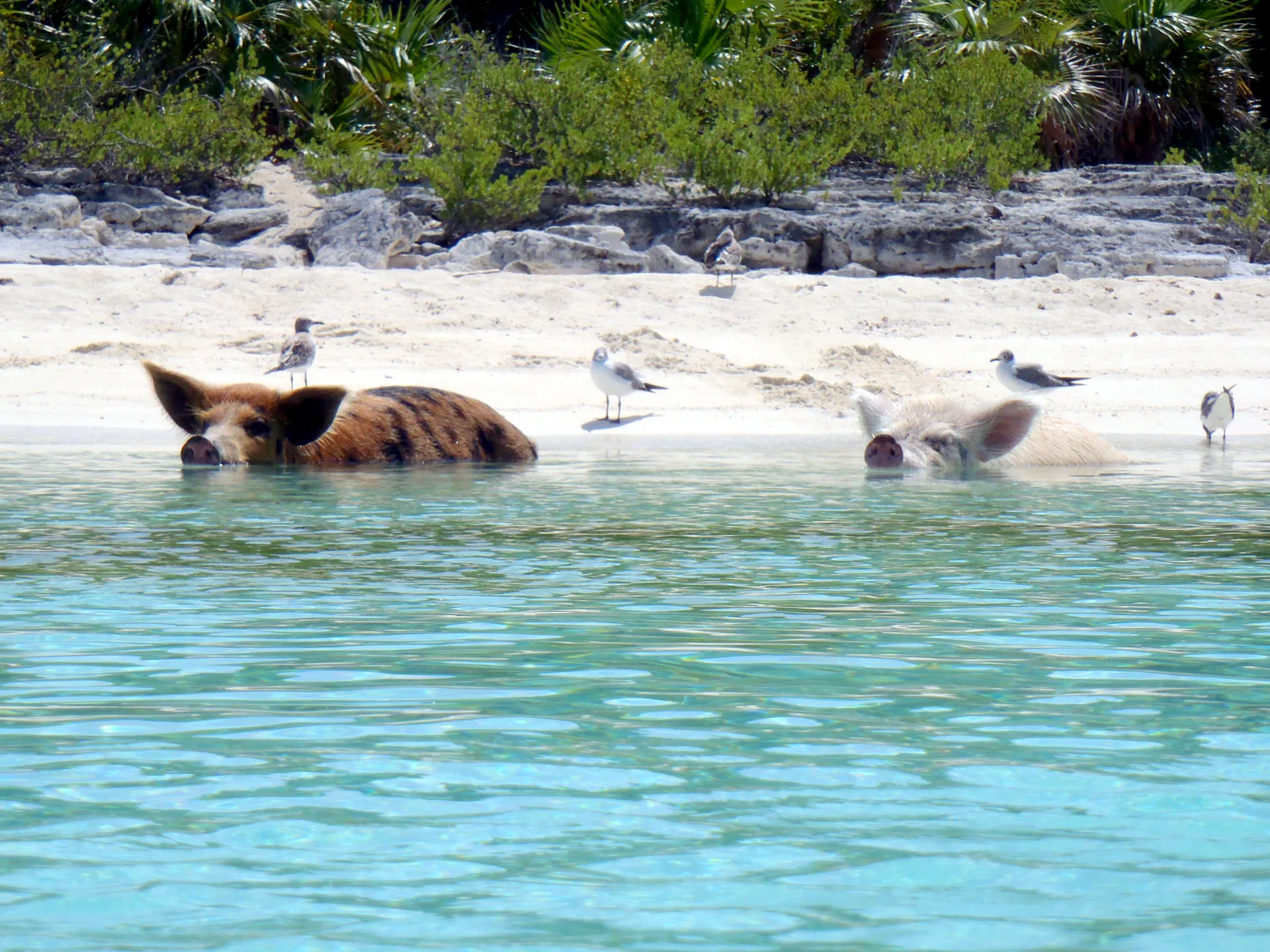
Swimming in the shallows alongside large animals requires practical hygiene awareness. Seawater near the shore carries bacteria stirred up by waste and foot traffic. Keep your mouth closed while swimming, rinse off with fresh water back on the boat, and treat any small cuts with antiseptic immediately. Remember that Pig Beach is just one stop in a delicate marine environment. The surrounding waters house nurse sharks, Allen Cay rock iguanas, and vulnerable coral reefs. You can explore how these encounters fit into a broader journey through our marine life guide or plan a wider route with our Exuma island hopping guide. Treat every cay with the same reverence you give the deep sea, and these islands will stay pristine for generations of mariners to come.